Showing 10 Result(s)

💬 Budget Chat #10 – Budgeting as Self-Care

Welcome back to Budget Chats with JMarie & Jasmine!

Simple conversations. Practical money tips to help you build better financial habits.

💬 This Week’s Budget Chat

😊 Jasmine:
“JMarie, I used to think budgeting was just about money. Why does it feel like it affects so much more?”

💜 JMarie:
“Because taking care of your money is also taking care of yourself. A budget can give you clarity, reduce financial stress, and help you make choices that support the life you want.”
The Conversation

Jasmine:
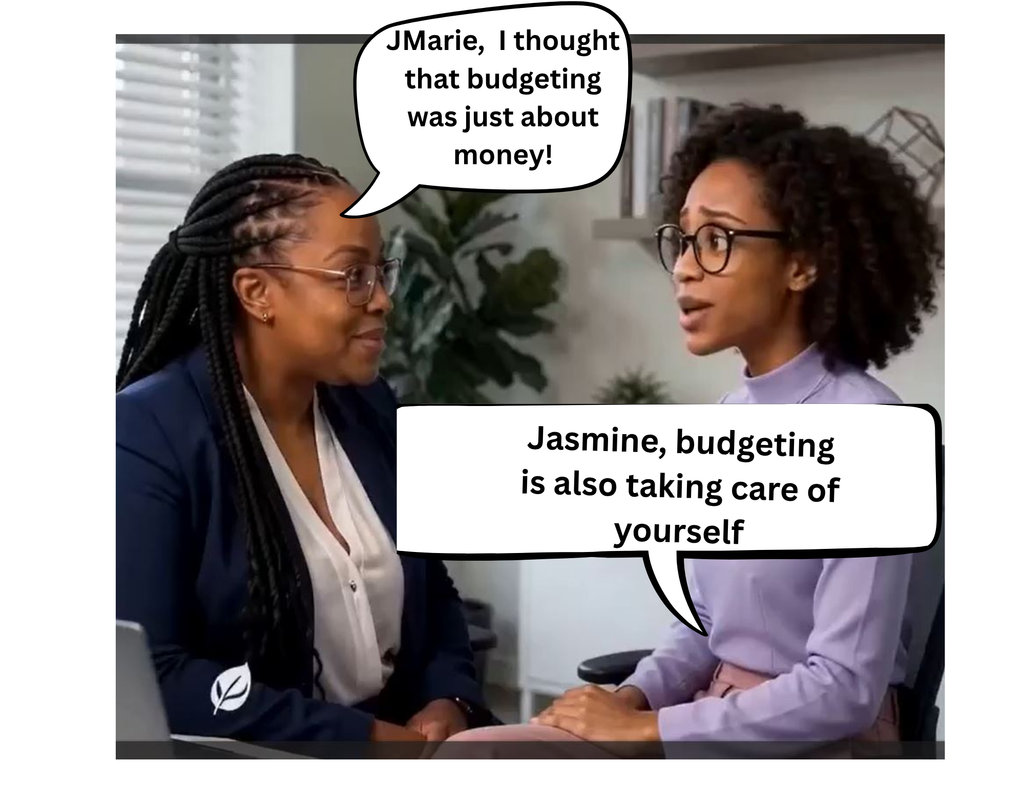
“JMarie, I used to think budgeting was just about money. Why does it feel like it affects so much more?”

JMarie:
“Because taking care of your money is also taking care of yourself. A budget can give you clarity, reduce financial stress, and help you make choices that support the life you want.”

Jasmine:
“So budgeting isn’t just about making sure the numbers work?”

JMarie:
“Exactly. It’s also about creating a sense of awareness and control. When you understand your finances, you can make decisions with more confidence.”

Jasmine:
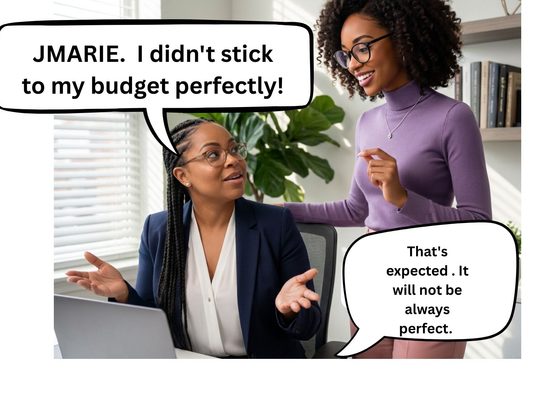
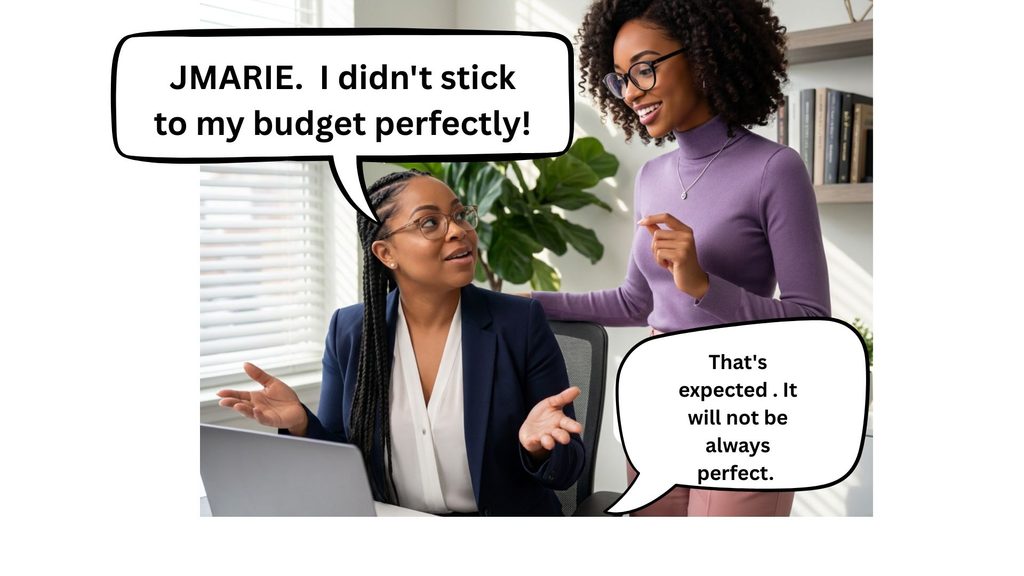
“But what if I make mistakes?”

JMarie:
“That’s part of being human. A financial mistake doesn’t erase all the progress you’ve made. You can learn from it, adjust your plan, and keep going.”

Jasmine:
“So budgeting can actually be a form of taking care of myself?”

JMarie:
“Absolutely. When you give your money direction, prepare for the unexpected, and make room for your priorities, you’re making choices that support your present and your future.”

💡 The Lesson

Budgeting is often presented as a numbers exercise.

Income.
Expenses.
Savings.
Debt.
Goals.

But behind those numbers is a person trying to build a life.

That’s why budgeting can be a form of financial self-care.

When you understand your finances, you may feel more prepared to make decisions. When you have a plan, unexpected expenses may feel less overwhelming. And when your spending reflects your priorities, your money can become a tool for supporting the life you want.

Financial Self-Care Can Look Like:

  • Checking your bank account instead of avoiding it
  • Creating a realistic budget
  • Saving for unexpected expenses
  • Paying bills on time
  • Making intentional spending choices
  • Giving yourself permission to enjoy your money
  • Asking for help when you need it
  • Learning from financial mistakes instead of allowing shame to stop you.

None of this requires perfection.

Give Yourself Room to Learn

Your financial situation can change.

Your income can change.
Your expenses can change.
Your priorities can change.

Your budget should be allowed to change with you.

A budget that worked six months ago may not work today. That doesn’t mean you failed.

It means it’s time to adjust.

Financial wellness isn’t about having a perfect financial life. It’s about developing the awareness and habits that help you navigate your financial life with greater intention.

🎯 Your Final Budget Chat Challenge

Take a few minutes to look back at everything you’ve explored throughout these ten Budget Chats.

Ask yourself:

What have I learned about my relationship with money?

Then choose one financial habit from this book that you want to continue.

It could be:

  • Tracking your spending
  • Paying yourself first
  • Separating needs from wants
  • Giving your money a purpose
  • Building your emergency fund
  • Watching small purchases
  • Creating a budget that feels sustainable
  • Thinking about your long-term financial future
  • Celebrating your progress

Write it down.

Then decide what one small action you will take this week to continue that habit.

You don’t need to change everything at once.

Choose one thing and keep going.

🤔 Final Reflection Questions

  • What have these Budget Chats taught me about my money?
  • Which conversation resonated with me the most?
  • What financial habit do I want to continue?
  • What financial habit do I want to improve?
  • What is one financial goal I want to work toward?
  • How can I make my budget support the life I want to live?
  • What does financial wellness mean to me?

💜 JMarie’s Final Reminder

“Your budget is not just about your money. It’s about creating a life that your money can support.”

💬 That’s a Wrap

Ten conversations. Ten opportunities to look at your money differently.

You don’t have to implement everything at once.

Start with one habit.
One decision.
One small change.

Then build from there.

Perfect. This is exactly the spot I was thinking of. We can add the Gumroad link right after the final paragraph, so someone finishing Budget Chat #10 immediately sees the ebook option.

I recommend adding:

📖 Want the Complete Budget Chats Guide?

Read. Reflect. Apply.
Get all 10 Budget Chats together in one practical guide designed to help you build better financial habits—one conversation at a time.

GET THE BUDGET CHATS EBOOK

Keep asking questions. Keep learning. Keep making intentional choices. And most importantly—keep building better financial habits, one Budget Chat at a time. 💜
💬 Budget Chat #9 – Celebrate Progress, Not Perfection

Welcome back to Budget Chats with JMarie & Jasmine!

Simple conversations. Practical money tips to help you build better financial habits.

💬 This Week’s Budget Chat

😊 Jasmine:
“JMarie, sometimes I feel like I’m not doing enough with my money. I still have goals I haven’t reached.”

💜 JMarie:
“That’s okay, Jasmine. You can have goals you haven’t reached yet and still recognize the progress you’ve already made.”

The Conversation

Jasmine:
“JMarie, sometimes I feel like I’m not doing enough with my money. I still have goals I haven’t reached.”

JMarie:
“That’s okay, Jasmine. You can have goals you haven’t reached yet and still recognize the progress you’ve already made.”

Jasmine:
“But shouldn’t I be focused on what I still need to fix?”

JMarie:
“You can work on what needs improvement without ignoring how far you’ve come. Financial progress isn’t always a big milestone.”

Jasmine:
“So what counts as progress?”

JMarie:
“Paying a bill on time. Saving your first $25. Spending less than you did last month. Saying no to something you don’t really need. Finally looking at your bank account instead of avoiding it. Those are all steps forward.”

Jasmine:
“I guess I don’t always count those things because they seem so small.”

JMarie:
“Small doesn’t mean insignificant. Financial habits are built through small decisions repeated over time.”

Jasmine:
“So I can celebrate where I am while still working toward where I want to be?”

JMarie:
“Exactly. Celebrate the progress, learn from the setbacks, and keep moving forward.”

💡 The Lesson

Financial progress doesn’t always look the way we imagine it.

Sometimes we think progress means paying off all our debt, having thousands of dollars in savings, reaching a major financial goal, or earning more money.

Those things can certainly be meaningful milestones.

But progress can also be much smaller.

Maybe you:

  • Started tracking your spending
  • Created your first budget
  • Saved your first $10 or $100
  • Paid a bill on time
  • Reduced an unnecessary expense
  • Started building an emergency fund
  • Thought twice before making an impulse purchase
  • Started talking about money instead of avoiding it

Those things count.

Progress Is Not a Straight Line

There may be months when you make great financial choices and months when things don’t go according to plan.

An unexpected expense may come up. You may overspend. You may have to use some of your savings.

🎯 Try This

Take a few minutes to look back at your financial habits.

Write down three things you’ve improved, even if they seem small.

Then write down:

One thing I’m proud of:

One financial habit I want to continue:

One thing I want to work on next:

Keep this somewhere you can return to later. When you reach another milestone, add it to the list.

🤔 Reflection Questions

  • What financial progress have I made that I haven’t acknowledged?
  • What money habit am I most proud of developing?
  • What setback have I learned something from?
  • Am I comparing my financial journey to someone else’s?
  • What is one goal I’m still working toward?
  • How can I celebrate progress without losing sight of my next goal?

💜 JMarie’s Reminder

“Don’t wait until you’ve reached the finish line to celebrate. Every better decision along the way is part of your progress.”

💬 Coming Next

Budget Chat #10 – Budgeting as Self-Care

ou’ve made it through nine Budget Chats.

You’ve learned how to track your spending, pay yourself first, distinguish needs from wants, give your money a purpose, prepare for emergencies, recognize small spending habits, create a sustainable budget, think about your financial future, and celebrate your progress.

Now it’s time to bring it all together.

In our final Budget Chat, we’ll talk about why taking care of your money can also be a form of taking care of yourself. 💜

Until next time, keep building better financial habits—one Budget Chat at a time.

– JMarie & Jasmine 💜

Budget Chat # 8 – Make Your Money Work for You

Absolutely, Judith. Here is the complete website blog for Budget Chat #8, using the content and wording from your workbook so the website stays aligned with the book.

Welcome back to Budget Chats with JMarie & Jasmine!

Simple conversations. Practical money tips to help you build better financial habits.

💬 This Week’s Budget Chat

😊 Jasmine:
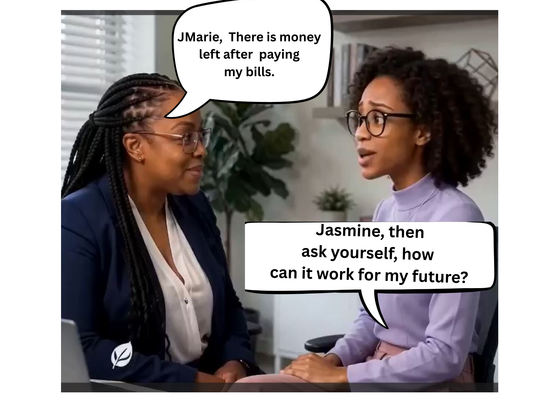
“JMarie, I’ve been getting better at budgeting and saving. But now I’m wondering—what do I do once I have money set aside?”

💜 JMarie:
“That’s when you can start asking a different question: How can my money work for my future?”

[Insert your Budget Chat #8 image here]

The Conversation

Jasmine:
“JMarie, I’ve been getting better at budgeting and saving. But now I’m wondering—what do I do once I have money set aside?”

JMarie:
“That’s when you can start asking a different question: How can my money work for my future?”

Jasmine:
“Isn’t saving already doing that?”

JMarie:
“Saving is an important part of it. But once you’ve taken care of your immediate needs and built some financial stability, you can start thinking beyond simply holding onto your money.”

Jasmine:
“So this is about thinking longer term?”

JMarie:
“Exactly. Your money can help you prepare for future goals, create opportunities, reduce financial burdens, and—depending on your situation—potentially grow over time.”

Jasmine:
“So instead of only asking, ‘What can I buy with this money?’ I can ask, ‘What can this money help me accomplish?'”

JMarie:
“Now you’re thinking differently. That’s the shift from simply managing money to thinking about what your money can help you build.”

💡 The Lesson

Once you’ve learned how to manage your everyday spending, save consistently, and create a financial cushion, it’s worth thinking about the bigger picture.

Your money doesn’t have to exist only for today’s expenses. It can also support your future.

For example, money can help you:

  • Build savings for future goals
  • Pay down debt and reduce future interest costs
  • Prepare for larger expenses
  • Invest for long-term goals
  • Develop skills or education that may create future opportunities
  • Build financial security for yourself and your family

The goal isn’t to chase every investment opportunity or try to make your money grow overnight.

It’s about developing the mindset of asking:

“What can my money help me build?”

Saving vs. Growing

Saving and investing serve different purposes.

Saving generally focuses on keeping money accessible and protecting it for short- or medium-term needs. Investing involves putting money into assets with the expectation of potential growth over time, but investments can also lose value.

That’s why your financial foundation comes first.

Before thinking about growing your money, consider whether you’ve taken care of your basic financial priorities and have money available for emergencies.

There is no single strategy that works for everyone. Your goals, timeline, income, and comfort with risk all matter.

🎯 Try This

Think about one financial goal that is at least a year or more into the future.

It could be:

  • Buying a home
  • Education
  • Retirement
  • Starting or growing a business
  • A major purchase
  • Building long-term financial security

Then ask yourself:

“What role can my money play in helping me reach this goal?”

Write down:

  • The goal
  • How much you think you’ll need
  • When you’d like to reach it
  • What you could realistically contribute
  • Where you might keep or allocate the money

You don’t have to figure out the entire strategy today.

Start by giving your future a place in the conversation.

🤔 Reflection Questions

  • What financial goals do I have beyond the next few months?
  • Am I only thinking about what my money can do for me today?
  • What could my money help me build over the next few years?
  • Do I have a financial foundation in place before pursuing longer-term growth?
  • What is one future goal I would like to start preparing for?
  • What is one step I can take toward that goal this year?

💜 JMarie’s Reminder

“Don’t only ask what your money can buy today. Ask what your money can help you build tomorrow.”

💬 Coming Next

Budget Chat #9 – Celebrate Progress, Not Perfection

You’ve spent this journey learning how to understand your money, make intentional choices, save, prepare for the unexpected, and think about your future.

But there’s one more habit we don’t talk about enough:

recognizing how far you’ve come.

Until next time, keep building better financial habits—one Budget Chat at a time.

– JMarie & Jasmine 💜

💬 Budget Chat #7 – Budget Without Feeling Restricted

Welcome back to Budget Chats with JMarie & Jasmine!

Every Budget Chat is designed to simplify personal finance through short conversations and practical tips that anyone can apply. Small changes in the way we think about money can lead to lasting financial habits.

💬 This Week’s Budget Chat

😊 Jasmine:
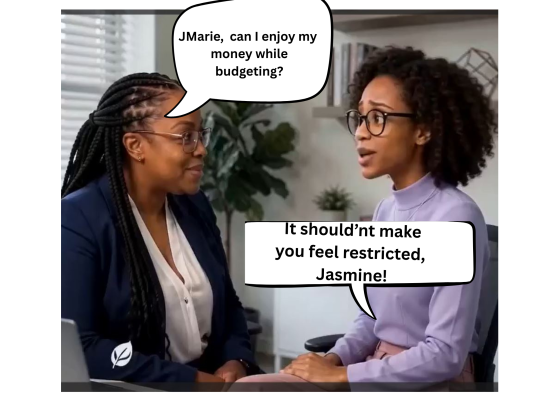
“JMarie, I feel like budgeting means I can’t enjoy my money.”

💜 JMarie:
“A good budget shouldn’t make you feel restricted. It should help you enjoy your money without losing control of it.”

Why This Matters

When people hear the word budget, they sometimes think about restriction.

No eating out. No shopping. No entertainment. No spending money on things you enjoy.

But that’s not what a healthy budget is supposed to do.

A budget isn’t about taking all the fun out of your life. It’s about making sure your spending reflects what matters most to you.

If you create a budget that leaves you with no room to enjoy your money, it may become difficult to maintain. Eventually, you may feel frustrated and abandon the budget altogether.

Instead, give yourself permission to spend on things you enjoy—just make sure those wants fit within your overall financial plan.

💜 Budget Boss Tip

Build fun money into your budget.

It could be $20, $50, $100, or whatever amount works for your situation.

The amount isn’t the point. The point is knowing that you’ve already planned for it.

When your bills are covered, your savings goals are being funded, and your spending money is planned, you can enjoy that money without feeling guilty.

Budgeting isn’t about saying “no” to everything. It’s about deciding what deserves a “yes.”

🎯 This Week’s Challenge

Look at your current budget and create a small “Enjoyment” or “Fun Money” category.

Then choose one thing you genuinely enjoy and plan for it.

Instead of spending impulsively, give yourself permission to enjoy it because you planned for it.

💼 Put It Into Practice with Budget Boss Pro

A budget is much easier to follow when you can clearly see where your money is going.

The Budget Boss Grocery System (Pro) can help you organize your spending, track expenses, and plan your money more intentionally.

When you have a system for tracking your spending, you’re better able to see where you can save—and where you have room to spend.

👉 Explore the Budget Boss Grocery System (Pro):
https://jrcreative.gumroad.com/l/thebudgetbossgrocerysystem

Plan with purpose. Track with confidence. Spend wisely.

Final Thoughts

A budget shouldn’t make you feel like you’re being punished for enjoying your life.

It should give you clarity and control.

You can pay your bills, save for your goals, prepare for the unexpected, and still enjoy your money.

The goal isn’t to spend nothing.

The goal is to spend intentionally.

When you create a budget that works with your life instead of against it, you’re more likely to stick with it.

💬 Join the Conversation

What’s one thing you enjoy spending money on that you want to make room for in your budget?

Share your answer in the comments. Remember—budgeting doesn’t mean you can’t enjoy your money. It means you’re choosing how to enjoy it intentionally.

💬 Coming Next Week

Budget Chat #8 – Make Your Money Work for You

Discover another simple money habit to help you continue building a stronger financial foundation.

Until next time, keep building better financial habits—one Budget Chat at a time.

– JMarie & Jasmine 💜

💬 Budget Chat #6 – Small Purchases Add Up

💬 This Week’s Budget Chat

😊 Jasmine:
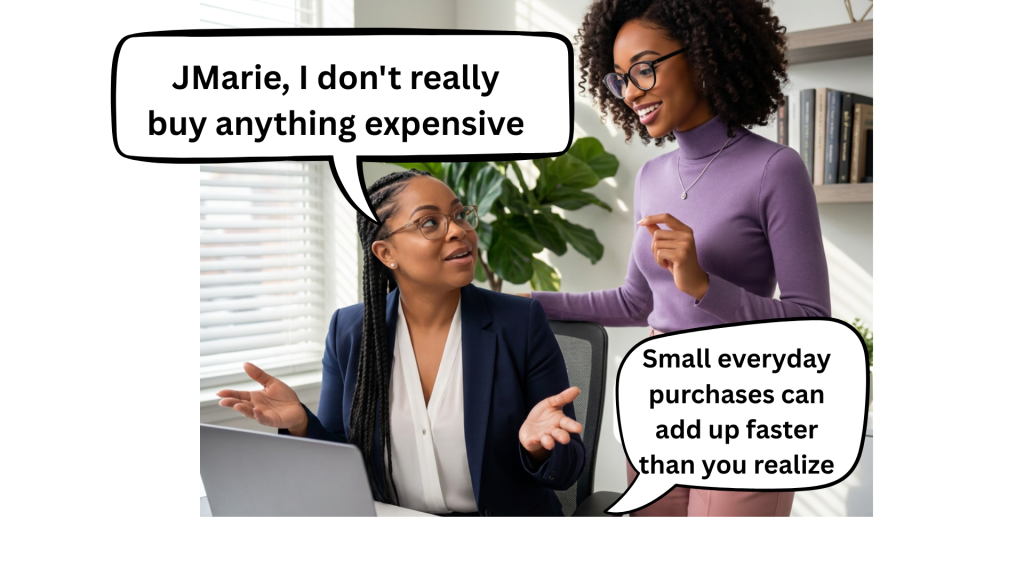
“JMarie, I don’t really buy anything expensive. So why does my money disappear so quickly?”

💜 JMarie:
“Sometimes it’s not the big purchases. Those small everyday purchases can add up faster than you realize.”

Why This Matters

When we think about overspending, we often picture a large purchase. But sometimes it’s the small, frequent purchases that quietly eat away at our budget.

A $5 coffee here, a $10 lunch there, a few convenience purchases throughout the week—it may not feel like much at the time. But when those purchases happen repeatedly, they can add up to a significant amount over a month.

The goal isn’t to stop enjoying the little things. It’s to become aware of them and decide which ones are actually worth your money. For example ne can make coffee at home which cost significantly less.

💜 Budget Boss Tip

Try a 7-Day Small Spending Check.

For one week, write down every small purchase you make—even the ones that seem insignificant.

Don’t judge yourself. Just track them.

At the end of the week, add them up and ask yourself:

“Am I happy with how much I spent on these little things?”

That answer can tell you a lot about your spending habits.


🎯 This Week’s Challenge

Choose one small expense you’d like to reduce this week.

Maybe it’s:

  • ☕ Coffee runs
  • 🍔 Takeout
  • 🛍️ Impulse purchases
  • 📱 Online shopping
  • 🥤 Convenience-store snacks
  • 🚗 Unplanned stops while you’re out

You don’t have to eliminate it completely.

Try reducing it by one purchase this week and put that money toward something that matters more to you.


💼 Put It Into Practice with Budget Boss Pro

This is where tracking becomes powerful.

The Budget Boss Grocery System (Pro) can help you keep a closer eye on your spending and organize your expenses so you can see where your money is going.

When you track your spending, those small purchases become easier to identify—and easier to manage.

👉 Explore the Budget Boss Grocery System (Pro):
https://jrcreative.gumroad.com/l/thebudgetbossgrocerysystem

Plan with purpose. Track with confidence. Spend wisely.


Final Thoughts

You don’t have to completely change your lifestyle to improve your finances.

Sometimes, it’s simply about becoming more aware of the small choices you make every day.

A few dollars saved here and there may seem insignificant, but consistent changes can create meaningful results over time.

Small purchases add up—but so do small savings.


💬 Join the Conversation

What’s one small purchase you make regularly that you’d like to cut back on?

Share it in the comments. You might inspire someone else to take a closer look at their own spending.

💬 Coming Next Week

Budget Chat #7 – Budget Without Feeling Restricted

Discover how to create a budget that gives you structure without making you feel like you can’t enjoy your money.

Until next time, keep building better financial habits—one Budget Chat at a time.

– JMarie & Jasmine 💜

💬 Budget Chat #5 – Build an Emergency Fund

Simple conversations. Practical money tips to help you build better financial habits.

Welcome back to Budget Chats with JMarie & Jasmine!

Building better financial habits doesn’t mean having a perfect budget or a lot of money. It starts with small decisions that give you more control and more financial breathing room.

One of those decisions is building an emergency fund

💬 This Week’s Budget Chat

👩🏾 Jasmine:
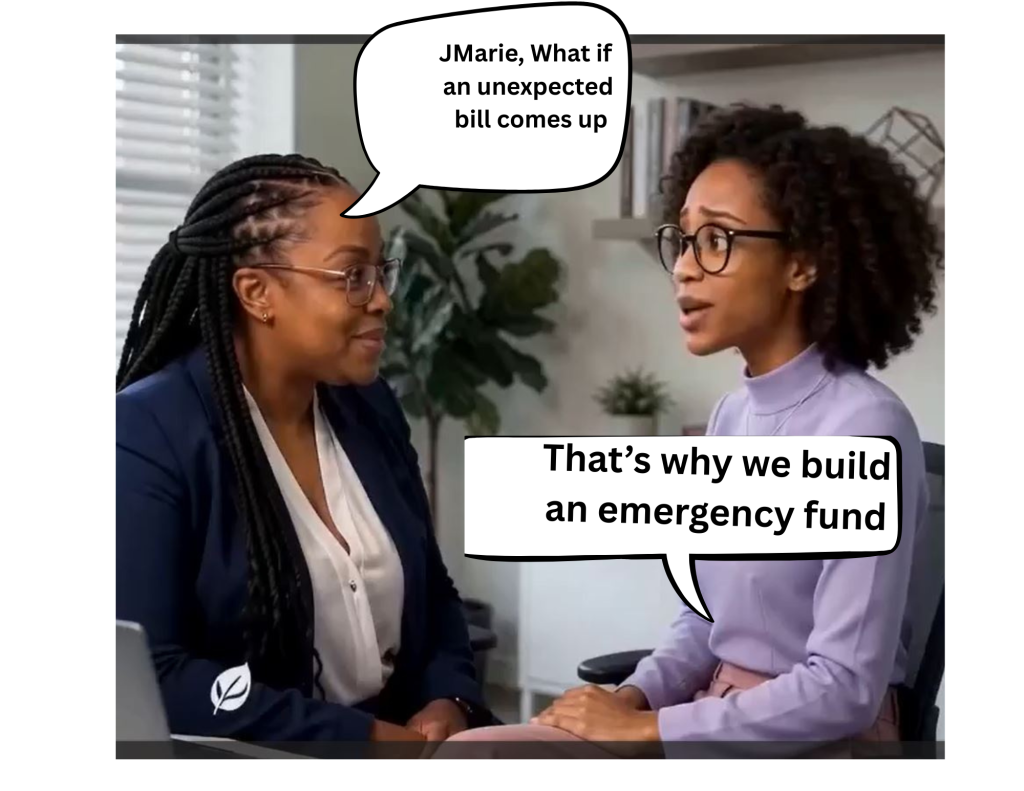
“JMarie, what if an unexpected bill comes up?”

💜 JMarie:
“That’s why we build an emergency fund—so surprises don’t become financial setbacks.”


Why an Emergency Fund Matters

Life happens.

Your car might need a repair. An appliance could stop working. You could have an unexpected expense that wasn’t part of your monthly budget.

Without money set aside, an unexpected expense can quickly turn into credit card debt or force you to take money away from another important goal.

An emergency fund gives you a financial cushion.

It doesn’t have to start with thousands of dollars. The goal is to start building the habit of setting money aside consistently.

Even $10, $20, or $25 at a time can become meaningful over time.

💡 Budget Boss Tip

Treat your emergency savings like a bill.

Instead of waiting to see what’s left at the end of the month, decide on an amount you can realistically save and make it part of your regular budget.

The amount matters less than building the habit.


Start With Your First Goal

If you’re just starting, don’t worry about immediately saving enough to cover several months of expenses.

Give yourself a smaller first target.

For example:

Goal #1: Save your first $100.

Then:

Goal #2: Build it to $500.

Then continue increasing your emergency fund as your income and financial situation allow.

The important thing is that you’re creating a cushion between yourself and the unexpected.


📝 Your Budget Boss Challenge

This week, choose an amount you can realistically set aside for emergencies.

It could be:

$5 • $10 • $20 • $25

Whatever works for your current budget.

Then make your first contribution.

Don’t worry about how small the beginning is.

You’re not just saving money. You’re building financial security.


📊 Need a Better Way to See Where Your Money Is Going?

Before you can consistently save, it helps to know where your money is going each month.

The Everyday Budget Bundle gives you both a digital and printable way to organize your finances.

It includes a 12-month Excel budget tracker with automatic calculations as well as a 12-month printable PDF budget pack, so you can choose the format that works best for you.

Get the Everyday Budget Bundle

💜 Final Thought

An emergency fund isn’t about expecting something bad to happen.

It’s about being prepared when life doesn’t go according to plan.

Small savings today can create more options tomorrow.

And remember:

You don’t have to build your emergency fund overnight. You just have to start.

Coming Next Week

Budget Chat #6 – Small Purchases Add Up

Those little everyday purchases may not seem like much—but over time, they can have a bigger impact on your budget than you realize.

Until next time, keep building better financial habits—one Budget Chat at a time.

– JMarie & Jasmine 💜

💬 Budget Chat #4 – Give Every Dollar a Job

Welcome

Welcome back to Budget Chats with JMarie & Jasmine!

Every Budget Chat is designed to simplify personal finance through short conversations and practical tips that anyone can apply. Small changes in the way we think about money can lead to lasting financial habits.


💬 This Week’s Budget Chat

😊 Jasmine:
“JMarie, how can I figure out what to do with my money?”

💜 JMarie:
“Give every dollar a job. Decide where your money should go before you spend it.”

Why This Matters

Have you ever reached the end of the month and wondered where your money went?

One of the biggest budgeting mistakes people make is spending first and planning later.

Giving every dollar a job means assigning a purpose to your income before you begin spending. Whether it’s rent, groceries, savings, transportation, or entertainment, every dollar should have a place in your budget.

When your money has a plan, you’re less likely to overspend or make impulse purchases. Instead of wondering where your money went, you’ll know exactly where it was intended to go.

A budget isn’t about restricting yourself—it’s about telling your money where to go instead of wondering where it went.


💜 Budget Boss Tip

Before payday, make a simple plan for every dollar you expect to receive.

Think about categories such as:

  • 🏠 Housing
  • 🛒 Groceries
  • 🚗 Transportation
  • 💰 Savings
  • 💳 Debt Payments
  • 🎉 Personal Spending

When every dollar has a purpose, you’re more likely to stay in control of your finances.

🎯 This Week’s Challenge

The next time you get paid, write down where every dollar will go before you spend it.

Even if you don’t have much to work with, giving your money a plan is the first step toward building healthier financial habits.


💼 Put It Into Practice with Budget Boss Pro

Ready to take your budgeting to the next level?

The Budget Boss Grocery System (Pro) is designed to help you organize your spending and make intentional financial decisions.

It includes:

  • 📊 Budget Tracking
  • 🛒 Grocery Planning
  • 📅 Project Tracker
  • 💡 Bills & Expense Tracker
  • 📦 Utilities Tracking
  • 💰 Category Totals and Spending Insights

Instead of wondering where your money went, you’ll have a simple system to help you plan, track, and spend wisely.

👉 Get the Budget Boss Grocery System (Pro):
https://jrcreative.gumroad.com/l/thebudgetbossgrocerysystem

“Plan with purpose. Track with confidence. Spend wisely.”

Final Thoughts

Budgeting doesn’t have to be complicated.

Sometimes the most powerful habit is simply giving every dollar a purpose.

When you start planning your money instead of reacting to it, you’ll feel more confident, more organized, and more in control of your financial future.


💬 Join the Conversation

What’s the first “job” you give your money every payday?

Share your thoughts in the comments—we’d love to hear from you!


💬 Coming Next Week

Budget Chat #5 – Build an Emergency Fund

Discover another simple money habit to help you continue building a stronger financial foundation.

Until next time, keep building better financial habits—one Budget Chat at a time.

– JMarie & Jasmine 💜

💬 Budget Chat #3 – Needs vs. Wants

Welcome back to Budget Chats with JMarie & Jasmine!

Every Budget Chat is designed to simplify personal finance through short conversations and practical tips that anyone can apply. Small changes in the way we think about money can lead to lasting financial habits.

💬 This Week’s Budget Chat

😊 Jasmine: “JMarie, how do I stop overspending”

💜 JMarie: “Before every purchase, ask yourself one question: Is it a need… or a want? Needs come first. Wants can wait.”


Why This Matters

One of the biggest reasons people struggle to stay on budget isn’t because they don’t know how to budget—it’s because it’s easy to confuse needs with wants.

A need is something essential for your everyday life. These are expenses like rent or mortgage payments, groceries, transportation, utilities, insurance, and medication. They help you live, work, and meet your responsibilities.

A want is something that adds enjoyment or convenience but isn’t essential. That new outfit, the latest phone, takeout when you already have food at home, or another coffee on the way to work may all be wants.

The goal isn’t to eliminate wants from your life. Instead, it’s about making sure your needs are taken care of first and that your wants fit comfortably within your budget.

Learning to pause before making a purchase gives you the opportunity to make intentional financial decisions instead of emotional ones.

Budget Boss Tip 💜

Before buying anything this week, ask yourself:

“Do I need this today, or do I simply want it?”

If it’s a want, give yourself 24 hours before making the purchase. Often, you’ll find that the urge to buy passes, helping you save money for the things that truly matter.


This Week’s Challenge

For the next seven days, write down one purchase you almost made.

Then ask yourself:

  • Was it a need?
  • Or was it a want?

You might be surprised by how much more aware you become of your spending habits.

Final Thoughts

Financial success isn’t built by making one perfect decision—it’s built through small, intentional choices made every day.

The next time you’re about to spend money, pause for a moment and ask yourself:

“Is this helping me build the future I want, or is it just satisfying a temporary feeling?”

Sometimes, the simplest question can lead to the biggest financial breakthrough.


💬 Join the Conversation

What’s one purchase you’ve delayed because you realized it was a want and not a need?

Share your thoughts in the comments—we’d love to hear your story!

💬 Coming Next Week

Budget Chat #4 – Give Every Dollar a Job

Discover another simple money habit to help you continue building a stronger financial foundation.

Until next time, keep building better financial habits—one Budget Chat at a time.

– JMarie & Jasmine 💜

Budget Chat #2 – Pay Yourself First

Welcome back to Budget Chats with JMarie & Jasmine!

Every Budget Chat is designed to simplify personal finance through short conversations and practical tips that anyone can apply. Building strong financial habits doesn’t happen overnight—it starts with one simple step at a time.


💬 This Week’s Budget Chat

👩🏾 Jasmine: “JMarie, what’s one money habit I should start?”

💜 JMarie: “Pay yourself first. Save before you spend.”


Why This Matters

One of the best financial habits you can develop is paying yourself first.

Many people pay their bills, cover their expenses, and then try to save whatever is left. More often than not, there isn’t much remaining.

Instead, reverse the process. Before spending on non-essential items, set aside a small amount for yourself. Think of your savings as one of your most important monthly bills.

The amount isn’t what matters most. Whether it’s $10, $25, or $100, consistency is what creates lasting financial change. Small deposits made regularly can grow into emergency savings, vacation funds, or even the down payment on your future home.

Saving first is an investment in your future self.


✨ Try This This Week

The next time you receive your paycheque, transfer a small amount directly into your savings account before spending on anything else.

Start with an amount that feels realistic and commit to making it a habit.

Remember, financial success isn’t built on one big decision—it grows from many small, consistent ones.


Building Better Financial Habits

Every healthy financial journey begins with intentional choices.

By paying yourself first, you’re making a commitment to your future goals rather than relying on whatever money happens to be left at the end of the month.

Progress is built through consistency, not perfection.


Coming Next Week…

Budget Chat #3 will introduce another simple money habit to help you continue building a stronger financial foundation.

Until next time… keep building better financial habits, one Budget Chat at a time.

— JMarie & Jasmine


.

Budget Chat#1 – Track Your Spending First

It’s time for our very first Budget Chat with JMarie & Jasmine!

These quick conversations are designed to make personal finance feel simple, practical, and easy to apply. Every week, JMarie and Jasmine will share one money tip to help you build healthier financial habits—one step at a time.

💬 This Week’s Budget Chat

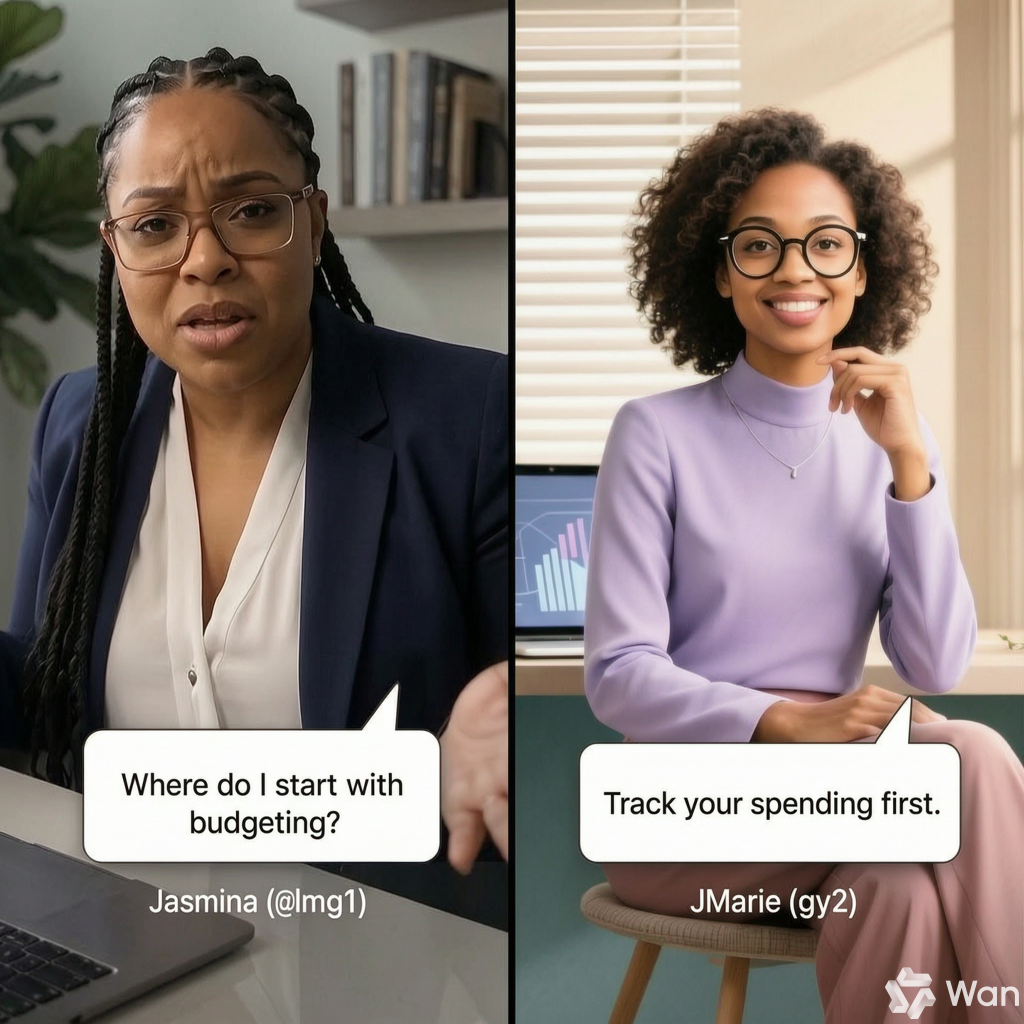
💬 Jasmine: “Where do I start with budgeting?”

💜 JMarie: “Track your spending first.”

Why This Matters

Before creating a budget, it’s important to understand where your money is actually going.

Many of us think we know how we spend our money, but small purchases—like coffee, takeout, online shopping, or subscriptions—can quickly add up without us realizing it.

Tracking your spending isn’t about making yourself feel guilty. It’s about becoming more aware of your habits so you can make informed financial decisions. Before creating a budget, spend one week tracking where every dollar goes. It’s one of the simplest habits you can build, and it gives you a clear picture of your spending so you can make better financial decisions.

Remember, you can’t improve what you don’t measure

✨ This week’s Wealth Wednesday Challenge:

For the next 7 days, write down every purchase you make.

It doesn’t matter if it’s $2 or $200—record it.

Use a notebook, your phone, or a budgeting app. The goal isn’t perfection; it’s awareness.

At the end of the week, review your spending and ask yourself:

  • Where did most of my money go?
  • Were my purchases intentional?
  • What spending habit surprised me the most?
  • Is there one expense I can reduce next week?

Small changes made consistently can lead to big financial improvements.

Building Better Financial Habits

Financial freedom doesn’t happen overnight. It begins with small, consistent actions that become lifelong habits.

Tracking your spending is the first step toward taking control of your finances. Once you understand where your money is going, you’ll be better prepared to create a budget that works for your lifestyle and your goals.

One conversation. One habit. One step closer to financial confidence.


Coming Next Week…

In Budget Chat #2, JMarie and Jasmine will discuss another simple habit that can strengthen your financial foundation.

Until then, take the challenge and start tracking your spending—because every financial journey begins with awareness.

👇Until next time… keep building better financial habits, one budget chat at a time.
— JMarie & Jasmine